

Joining a storytelling community can feel daunting when you are an emerging author seeking both support and a loyal audience. These spaces offer far more than a place to post your stories—they nurture creative growth, connection, and fresh opportunities for income worldwide. Modern storytelling communities are vibrant ecosystems where authors and readers engage in collaborative narrative development and cross-cultural knowledge exchange, opening doors for creativity and shared success.
Table of Contents
- What Are Storytelling Communities Today
- Types of Storytelling Communities Online
- How Storytelling Platforms Support Authors
- Building Audiences and Earning Income
- Risks and Common Pitfalls to Consider
Key Takeaways
| Point | Details |
|---|---|
| Evolution of Storytelling Communities | Modern storytelling communities transcend traditional narratives, fostering collaborative environments that enhance creativity and understanding among authors and readers. |
| Inclusivity and Diversity | These digital ecosystems emphasize inclusivity, breaking geographical barriers and allowing diverse voices to share their stories and experiences. |
| Support for Independent Authors | Storytelling platforms provide unprecedented opportunities for skill development, audience building, and monetization, fundamentally reshaping how writers connect with their audiences. |
| Awareness of Risks | Authors must navigate ethical considerations and potential risks associated with narrative representation, privacy concerns, and intellectual property to protect their work and credibility. |
What Are Storytelling Communities Today
Storytelling communities have evolved far beyond traditional narrative spaces, transforming into dynamic digital ecosystems where creators and audiences connect through shared narratives. These platforms represent more than simple communication channels; they are powerful social mechanisms that reconstruct cultural realities.
Today's storytelling communities serve multiple critical functions for independent authors and readers. They are not just platforms for content sharing, but collaborative environments that foster creativity, support, and mutual understanding. Key characteristics include:
- Collaborative narrative development
- Cross-cultural knowledge exchange
- Community-driven content creation
- Direct audience interaction
- Skill development through peer feedback
These communities have particularly significant implications for independent authors. By providing spaces where writers can test ideas, receive immediate feedback, and build supportive networks, they fundamentally reshape how stories are created and consumed. Local knowledge and collective storytelling become powerful tools for artistic and personal growth.
Unlike traditional publishing models, modern storytelling communities emphasize inclusivity, allowing diverse voices to emerge and find their audiences. They break down geographical barriers, enabling writers from different backgrounds to share experiences, critique each other's work, and develop narratives that might otherwise remain untold.
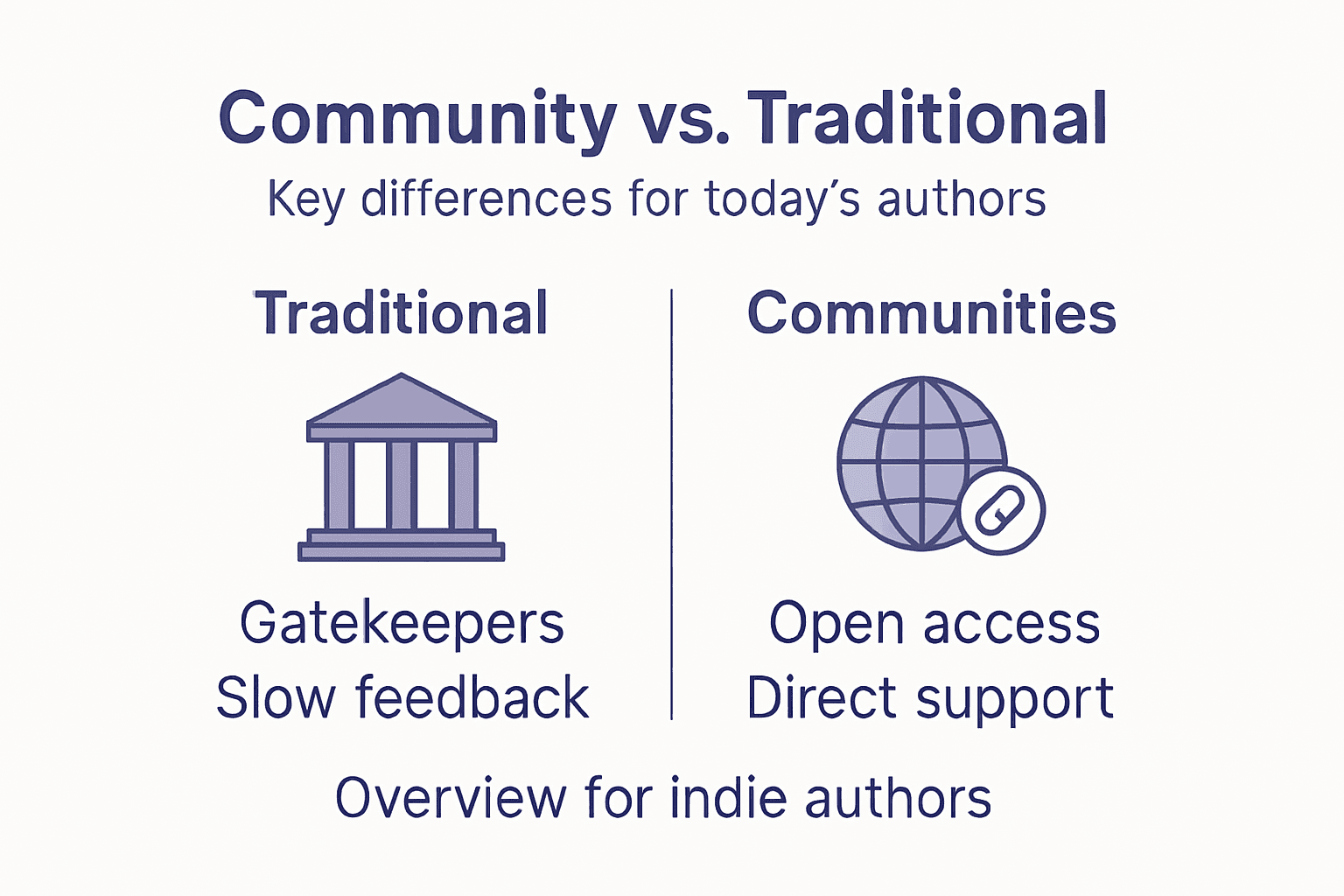
Here's a comparison of traditional publishing models and modern storytelling communities:
| Aspect | Traditional Publishing | Storytelling Communities |
|---|---|---|
| Accessibility | Limited, selective | Open to global participants |
| Audience Interaction | Minimal, one-way | Direct, ongoing engagement |
| Diversity of Voices | Often restricted | Broad range of perspectives |
| Speed of Feedback | Slow, post-publication | Immediate, peer-based |
Pro Tip: When joining a storytelling community, approach interactions with genuine curiosity and openness to feedback, treating every interaction as an opportunity for mutual learning and artistic development.
Types of Storytelling Communities Online
Online storytelling communities have diversified dramatically, offering writers multiple platforms to connect, share, and develop their narratives. Participatory storytelling programs now span a wide range of digital environments, each with unique characteristics and audience interactions.
The primary types of online storytelling communities include:
- Social Media Groups: Facebook and LinkedIn communities focused on specific genres or writing styles
- Genre-Specific Forums: Specialized platforms dedicated to science fiction, romance, fantasy, and other narrative genres
- Interest-Based Communities: Writing groups centered around specific themes like travel, personal development, or cultural experiences
- Collaborative Platforms: Interactive websites where multiple authors can contribute to shared narrative projects
- Professional Networking Communities: Platforms connecting writers with editors, publishers, and other industry professionals
Some communities focus on specific narrative strategies, with debate-oriented storytelling platforms emerging as particularly dynamic spaces for creative expression. These digital environments go beyond simple content sharing, enabling complex social interactions where stories become tools for persuasion, understanding, and community building.
Moreover, these online communities are not just about publishing stories, but about creating complex ecosystems of creativity. They provide support networks, skill development opportunities, and spaces for writers to experiment with narrative techniques, receive constructive feedback, and connect with like-minded storytellers across geographical boundaries.
Pro Tip: Select storytelling communities that align with your specific writing goals and offer genuine opportunities for skill development and meaningful interaction.
How Storytelling Platforms Support Authors
Storytelling platforms have revolutionized the way authors develop, share, and monetize their creative work. Digital storytelling tools now provide comprehensive support systems that go far beyond traditional publishing models, offering writers unprecedented opportunities for growth and engagement.
These platforms typically support authors through multiple critical mechanisms:
- Skill Development: Integrated writing tools and AI-powered feedback systems
- Audience Building: Direct connection with readers and community engagement features
- Monetization Pathways: Flexible revenue models that reward content creation
- Creative Experimentation: Multimedia storytelling options and genre-flexible platforms
- Professional Networking: Connections with editors, publishers, and fellow writers
Beyond technical support, storytelling platforms are transforming how narratives are constructed and shared. Narrative-based writing approaches challenge traditional writing norms, enabling authors to present their work in more engaging and accessible formats. This shift empowers writers to reach wider audiences and communicate more effectively across diverse platforms.

The most sophisticated storytelling platforms recognize that supporting authors means more than providing publication space. They create ecosystem environments that nurture creativity, offer constructive feedback, protect intellectual property, and provide transparent monetization strategies. By combining technological innovation with human-centric design, these platforms are redefining the relationship between writers, their work, and their potential readers.
Below is a summary of top digital storytelling platforms and their key user benefits:
| Platform Type | Main Benefit | Ideal Users |
|---|---|---|
| Collaborative Websites | Group story creation | Team writers |
| Professional Networks | Career opportunities | Aspiring authors |
| Multimedia Platforms | Creative experimentation | Visual storytellers |
| Genre-Specific Forums | Niche audience access | Specialized writers |
Pro Tip: Choose storytelling platforms that offer comprehensive support beyond simple publication, focusing on those that provide genuine skill development, audience engagement, and transparent monetization opportunities.
Building Audiences and Earning Income
Independent authors today have unprecedented opportunities to build audiences and generate income through diverse digital platforms. Self-published authors increasingly harness innovative marketing strategies that go beyond traditional publishing models, creating multiple revenue streams and direct reader connections.
Successful audience building and income generation typically involve several strategic approaches:
- Direct Reader Engagement: Creating interactive content and consistent communication
- Subscription Models: Offering exclusive content and memberships
- Multimedia Storytelling: Expanding narratives across different platforms and formats
- Cross-Platform Marketing: Leveraging social media and targeted promotional techniques
- Genre-Specific Targeting: Focusing on high-performing narrative categories
Indie author earnings demonstrate significant potential when authors adopt flexible business models. Romance, graphic novels, and serialized storytelling have emerged as particularly lucrative genres, with successful writers generating income through a combination of direct sales, digital platforms, and auxiliary services like workshops or speaking engagements.
The most successful authors recognize that building an audience is about creating genuine connections. This means developing a consistent brand, understanding reader preferences, and delivering high-quality content across multiple channels. By diversifying income sources and maintaining authentic engagement, writers can transform storytelling from a passion into a sustainable professional pursuit.
Pro Tip: Develop a strategic approach to audience building by creating multiple touchpoints and consistently delivering value across different platforms and content formats.
Risks and Common Pitfalls to Consider
Storytelling platforms, while offering incredible opportunities, also present significant challenges that authors must carefully navigate. Storytelling risks involve complex ethical considerations that extend beyond simple content creation, requiring authors to be mindful of potential pitfalls and professional boundaries.
Common risks and challenges for authors include:
- Ethical Representation: Avoiding cultural misunderstandings or inappropriate content
- Privacy Concerns: Protecting personal and reader information
- Consent and Attribution: Ensuring proper credit and permissions
- Intellectual Property: Preventing unauthorized content use
- Reputation Management: Maintaining professional credibility
Storytellers frequently encounter narrative challenges that can undermine their work's effectiveness. These include misjudging audience expectations, creating unengaging narratives, lacking clear narrative conflict, or presenting characters that fail to resonate with readers. Successful authors must develop keen self-awareness and continually refine their storytelling techniques.
Navigating these risks requires a proactive approach. Authors should invest time in understanding platform guidelines, developing robust personal boundaries, and creating content that respects both creative integrity and audience expectations. Continuous learning, seeking feedback, and maintaining professional standards are crucial strategies for mitigating potential storytelling risks.
Pro Tip: Regularly audit your content for potential ethical risks, seek constructive feedback, and maintain clear professional boundaries in your storytelling practice.
Join a Dynamic Storytelling Community Built for Authors Like You
Are you ready to overcome the challenges of limited audience interaction and slow feedback that often come with traditional publishing? Many authors struggle to build meaningful connections and monetize their work fairly. At Li & Ekri, we understand the importance of community-driven content creation and direct reader engagement highlighted in the article. Our platform offers you a unique chapter-by-chapter storytelling model where you set your own prices, retain significant revenue, and grow your personal audience with real-time support.
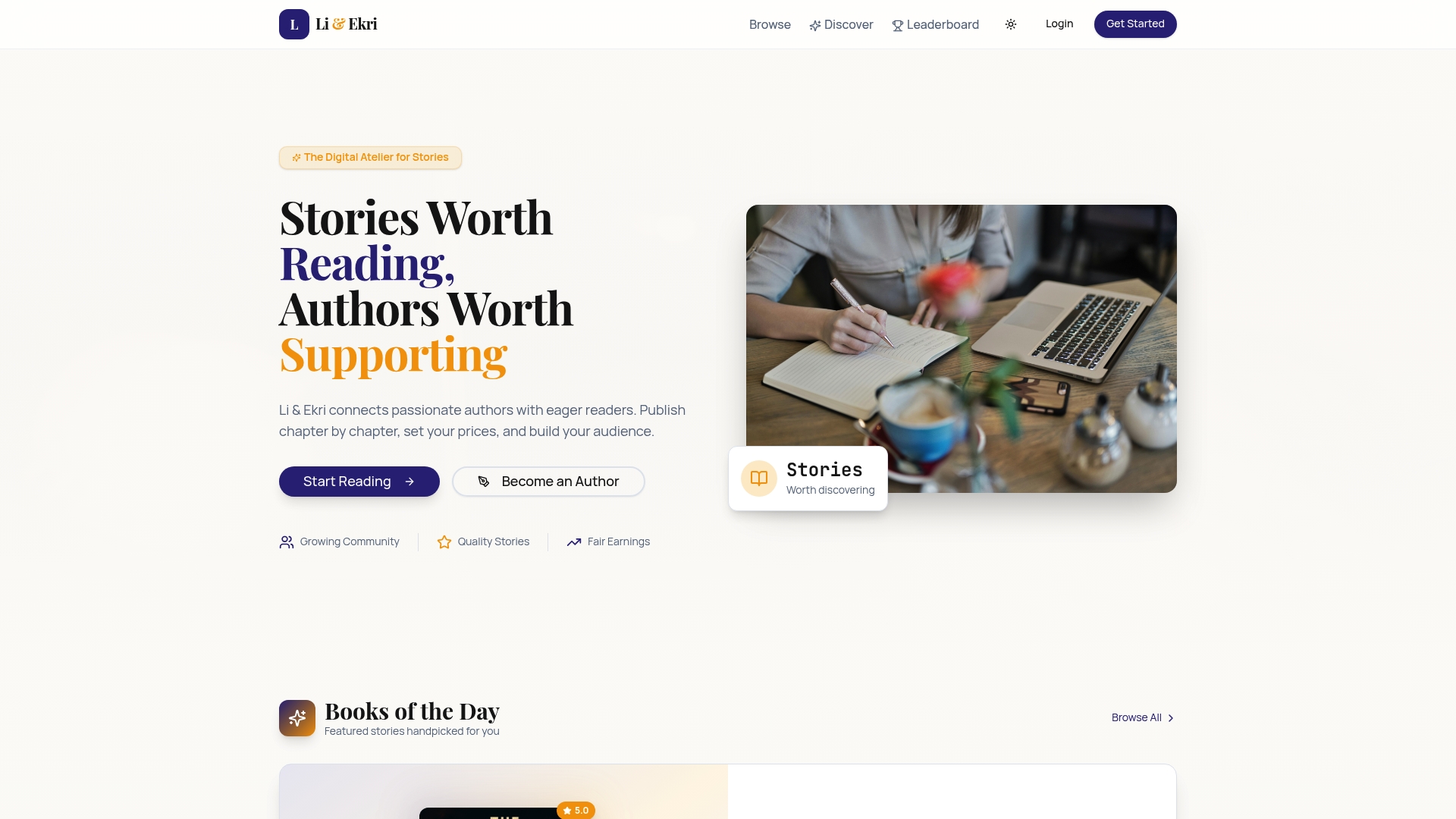
Discover how you can elevate your storytelling journey by joining Li & Ekri now. Experience a vibrant community that fosters creativity, immediate feedback, and fair earnings. Visit our main page to start publishing incrementally and connect with passionate readers eager for new stories. Make the leap today and transform your writing into a sustainable career.
Frequently Asked Questions
What are the benefits of joining storytelling communities as an author?
Joining storytelling communities provides authors with opportunities for collaborative narrative development, direct audience interaction, and constructive peer feedback, which can foster creativity and support artistic growth.
How do storytelling communities differ from traditional publishing models?
Storytelling communities emphasize inclusivity and allow diverse voices to emerge, offering open access, direct engagement with audiences, and immediate feedback, contrasting with the limited and selective nature of traditional publishing.
What types of storytelling communities can authors join?
Authors can join various types of online storytelling communities, including social media groups, genre-specific forums, collaborative platforms, professional networking communities, and interest-based groups tailored to specific themes.
How can authors effectively build an audience within storytelling communities?
Authors can build an audience by engaging directly with readers, using subscription models, tapping into multimedia storytelling, and employing cross-platform marketing strategies to connect with their audience and enhance visibility.