

Bold ideas meet creative possibility when independent authors step into the world of digital storytelling. As technology reshapes how stories are told and shared, these platforms let writers bypass old publishing gatekeepers while connecting directly with passionate communities. You will discover how multimedia narratives now empower creative freedom, global reach, and new revenue streams, unlocking fresh opportunities for anyone ready to monetize serialized fiction and collaborate with fellow storytellers.
Table of Contents
- Digital Storytelling Platforms Defined and Debunked
- Types of Digital Platforms for Authors
- Core Features and Unique Advantages
- Monetization and Community Engagement Models
- Comparing Digital Platforms to Traditional Publishing
Key Takeaways
| Point | Details |
|---|---|
| Innovative Multimedia Integration | Digital storytelling platforms combine various forms of media, enabling a richer narrative experience than traditional methods. |
| Creative Autonomy for Authors | These platforms provide authors with full control over their content, allowing flexibility in storytelling approaches and direct audience engagement. |
| Diverse Monetization Opportunities | Authors can explore multiple revenue models, from subscriptions to crowdfunding, enhancing their income potential significantly. |
| Instant Global Accessibility | Digital platforms allow for immediate distribution to worldwide audiences, overcoming geographical barriers that traditional publishing faces. |
Digital Storytelling Platforms Defined and Debunked
Digital storytelling represents a dynamic intersection between narrative creativity and technological innovation. Unlike traditional storytelling methods, these platforms leverage multimedia tools to transform how stories are created, shared, and experienced. Emerging research reveals that digital storytelling goes far beyond simple content distribution, serving as a powerful method for democratizing narrative creation.
At its core, digital storytelling platforms enable creators to craft multimedia narratives that integrate multiple forms of expression:
- Text-based storytelling
- Audio narration
- Visual imagery
- Interactive multimedia elements
- Nonlinear narrative structures
What sets these platforms apart is their capacity to break traditional storytelling boundaries. Technological advances have revolutionized narrative creation, allowing global participants to generate stories that are more engaging, diverse, and accessible than ever before. These platforms are not just technological tools but cultural spaces that facilitate creative expression and cross-cultural communication.
The fundamental characteristics of digital storytelling platforms include:
- Global accessibility
- Multimedia integration
- Interactive narrative experiences
- Community-driven content creation
- Flexible storytelling formats
These platforms challenge conventional publishing models by giving authors direct control over their creative output. Writers can now experiment with narrative techniques, reach global audiences, and monetize their work in ways previously unimaginable.
Pro tip: Explore multiple digital storytelling platforms to understand their unique features and find the environment that best matches your creative vision.
Types of Digital Platforms for Authors
Digital storytelling platforms have evolved into sophisticated ecosystems that cater to diverse author needs, offering more than just basic publishing tools. Comprehensive research reveals multiple categories of platforms designed to support different storytelling approaches and creative requirements.
Authors can choose from several distinct types of digital platforms:
- Multimedia Presentation Platforms
- Adobe Spark
- Canva
- Shorthand
- Interactive Narrative Tools
- Twine
- StoryMapJS
- Inklewriter
- Comprehensive Content Creation Suites
- Scrivener
- Google Docs
- Ulysses
Digital storytelling tools range from simple drag-and-drop interfaces to complex multimedia integration platforms. These tools empower authors to create immersive narratives that transcend traditional text-based storytelling, incorporating audio, video, interactive elements, and dynamic visual experiences.
Each platform type offers unique advantages for authors:
Here's a comparison of digital storytelling platform types and their ideal use cases:
| Platform Type | Ideal For | Example Platforms |
|---|---|---|
| Multimedia Presentation | Visual narratives and branding | Adobe Spark, Canva |
| Interactive Narrative Tools | Nonlinear, engaging stories | Twine, StoryMapJS |
| Content Creation Suites | Long-form writing and workflows | Scrivener, Ulysses |
| Community-Driven Ecosystems | Collaborative storytelling | Wattpad, Medium |
- Presentation platforms focus on visual storytelling
- Interactive tools enable reader engagement
- Content suites provide comprehensive writing environments
- Multimedia platforms support rich narrative experiences
- Community-driven platforms facilitate collaborative storytelling
Modern digital platforms represent more than technological solutions - they are creative ecosystems that democratize storytelling, allowing authors to experiment with narrative forms, reach global audiences, and monetize their creative work in unprecedented ways.
Pro tip: Experiment with multiple digital storytelling platforms to discover which best matches your unique creative workflow and storytelling style.
Core Features and Unique Advantages
Digital storytelling platforms represent a revolutionary approach to narrative creation, offering authors unprecedented tools for creative expression. These platforms go beyond traditional writing environments by integrating multiple multimedia elements that transform how stories are conceptualized, developed, and shared.
The core features of digital storytelling platforms include:
- Multimedia Integration
- Audio embedding
- Video integration
- Interactive graphics
- Dynamic visual elements
- User Interactivity
- Reader engagement tools
- Customizable narrative paths
- Real-time feedback mechanisms
- Narrative Flexibility
- Non-linear storytelling options
- Genre-blending capabilities
- Adaptive content structures
Research demonstrates that these platforms offer unique advantages that traditional publishing methods cannot match. Authors gain unprecedented creative freedom, with tools that support complex narrative structures, global audience reach, and innovative storytelling techniques.
The most significant advantages for authors include:
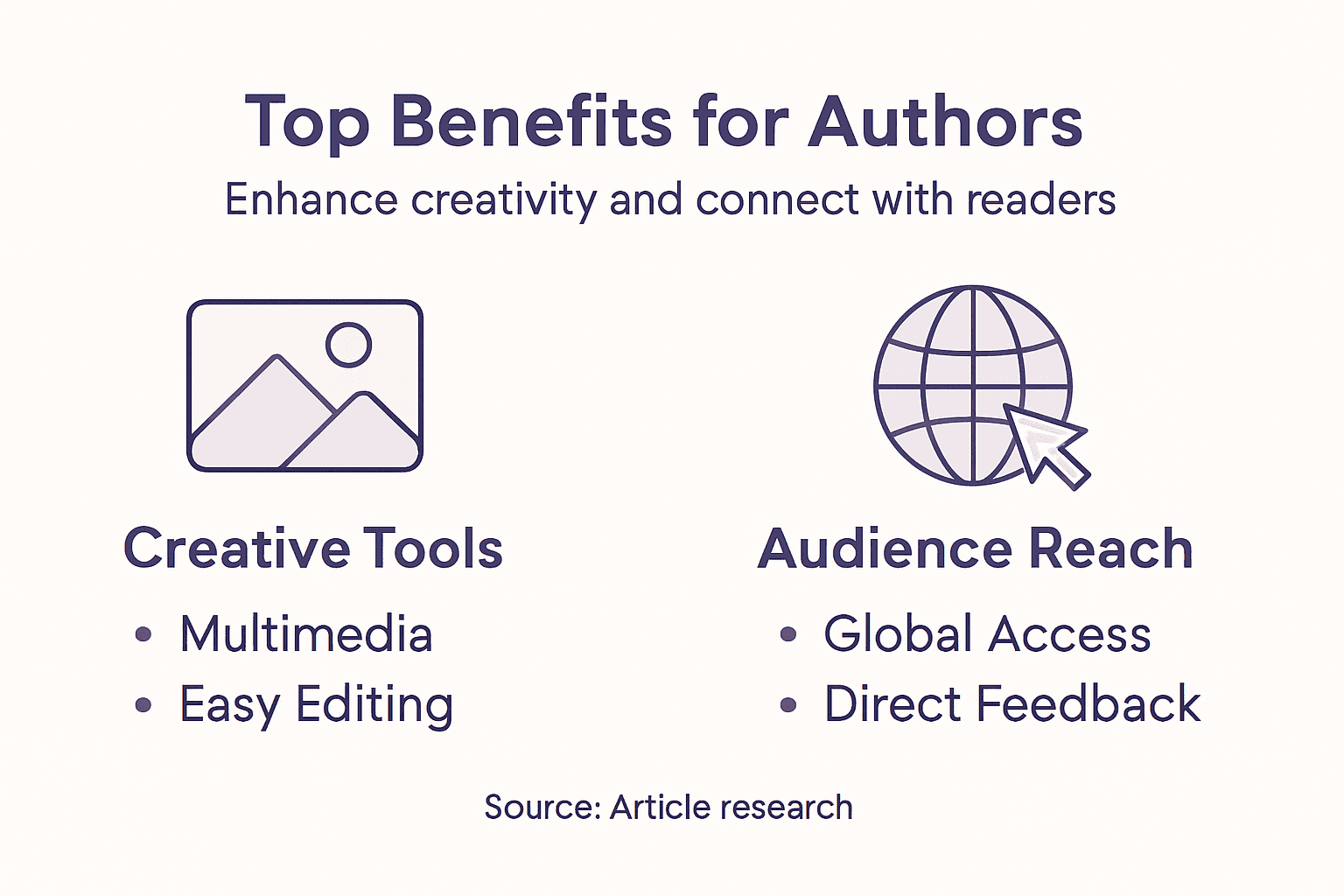
- Enhanced creative expression
- Global content distribution
- Direct audience interaction
- Multiple revenue stream potential
- Rapid iteration and feedback
Digital storytelling ecosystems represent more than technological platforms - they are dynamic creative environments that democratize content creation, allowing authors to experiment with narrative forms, connect directly with readers, and transform their storytelling potential.

Pro tip: Experiment with multiple platform features to discover unique storytelling techniques that complement your creative style.
Monetization and Community Engagement Models
Digital platforms offer sophisticated monetization strategies that empower authors to transform creative content into sustainable income streams. These innovative models go beyond traditional publishing approaches, providing multiple revenue generation opportunities tailored to digital storytelling environments.
Authors can leverage diverse monetization strategies:
- Direct Revenue Models
- Chapter-based pricing
- Subscription tiers
- Premium content access
- Crowdfunding support
- Engagement-Based Earnings
- Reader interaction rewards
- Performance-based bonuses
- Community contribution credits
- Collaborative Income Streams
- Co-authoring revenue shares
- Collaborative storytelling projects
- Cross-platform promotional opportunities
AI-powered community engagement tools have transformed how authors interact with readers, creating dynamic feedback loops and personalized storytelling experiences. These technologies enable more intimate connections between creators and their audiences, supporting deeper community involvement and more sustainable monetization strategies.
The most effective community engagement models typically include:
- Interactive narrative experiences
- Real-time author-reader communication
- Personalized content recommendations
- Gamified reading progression
- Collaborative storytelling opportunities
Digital storytelling platforms are reimagining the relationship between authors and audiences, creating ecosystems where creativity, community, and commerce intersect in unprecedented ways.
Pro tip: Diversify your monetization strategies and actively engage with your reader community to build sustainable creative income.
Comparing Digital Platforms to Traditional Publishing
Publishing landscapes have dramatically transformed with the emergence of digital storytelling platforms, challenging long-established publishing paradigms. These new ecosystems offer authors unprecedented creative control and direct audience engagement that traditional publishing models struggle to match.
Key differences between digital and traditional publishing include:
- Accessibility
- Digital: Instant global reach
- Traditional: Limited distribution channels
- Financial Models
- Digital: Higher author royalties
- Traditional: Lower percentage earnings
- Editorial Process
- Digital: Flexible, author-driven
- Traditional: Rigorous, publisher-controlled
- Time to Market
- Digital: Rapid publication
- Traditional: Lengthy approval processes
Comprehensive publishing research reveals nuanced advantages and challenges in both models. Digital platforms democratize storytelling by removing gatekeeping barriers, allowing authors to publish without extensive corporate approval processes.
The most significant contrasts between digital and traditional publishing emerge in:
The following table summarizes key benefits of digital versus traditional publishing:
| Area | Digital Platforms | Traditional Publishing |
|---|---|---|
| Creative Control | Full author autonomy | Publisher-driven decisions |
| Distribution Speed | Immediate global access | Slow, region-limited release |
| Revenue Potential | Multiple income streams | Single royalty model |
| Audience Feedback | Direct, real-time interaction | Indirect, delayed response |
- Creative autonomy
- Revenue potential
- Audience interaction
- Publication speed
- Distribution mechanisms
Digital storytelling platforms represent a fundamental shift in content creation, transforming authors from passive participants to active entrepreneurs in their creative journeys.
Pro tip: Evaluate your specific storytelling goals to determine whether digital or traditional publishing better aligns with your creative and financial objectives.
Unlock Your Story's True Potential with Li & Ekri
The article highlights the challenges authors face in digital storytelling platforms such as balancing creative control, audience engagement, and monetization. If you are struggling to find a platform that offers flexible storytelling formats, direct audience interaction, and the ability to monetize your work fairly, then the solution is here. Li & Ekri understands these key pain points by offering a chapter-by-chapter publishing model that empowers you to build a loyal community while retaining significant revenue shares.
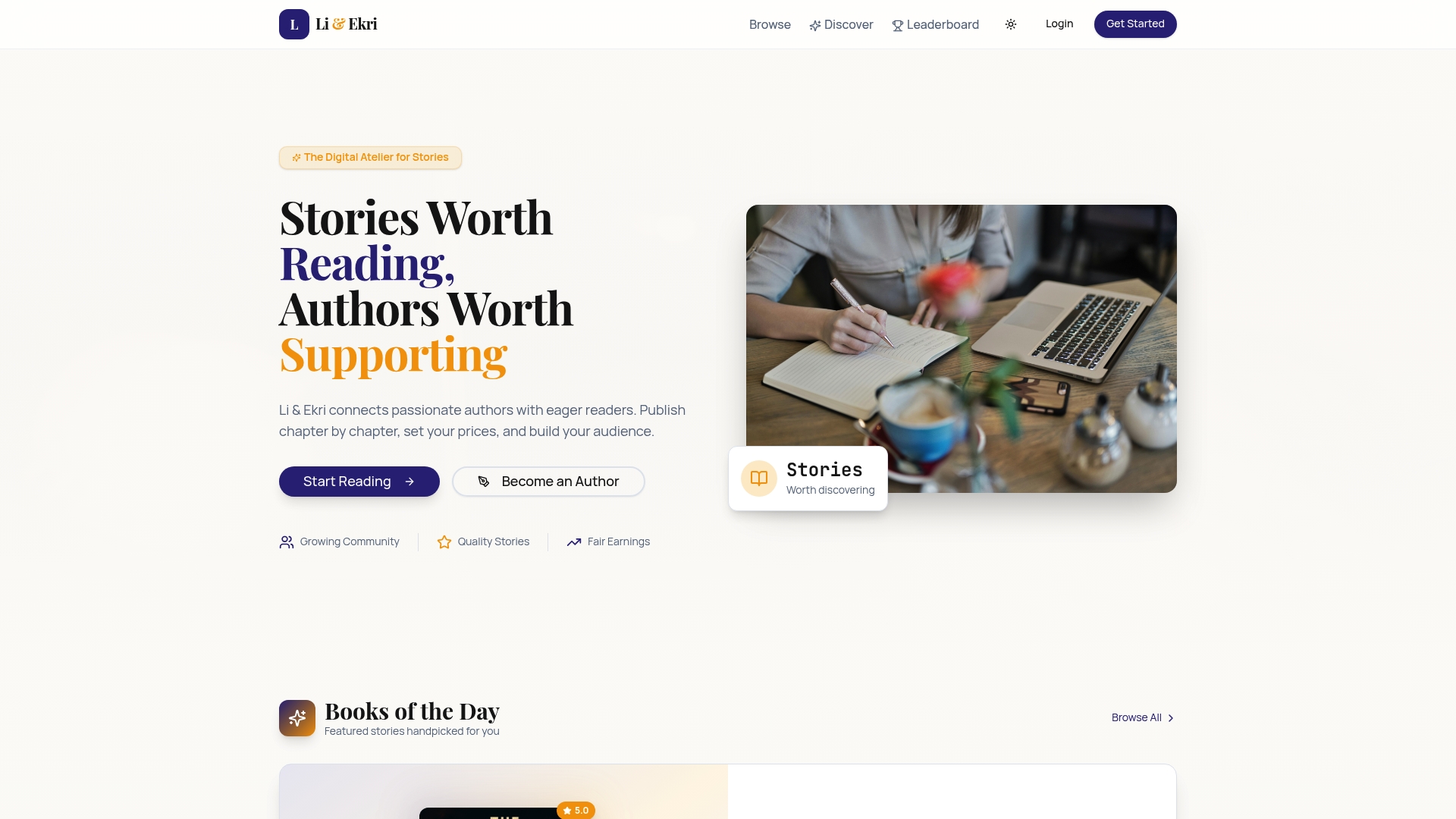
Join Li & Ekri today to experience a unique hybrid platform designed specifically for authors who want to transform their narrative journeys. Publish incrementally, set your own prices, and connect with eager readers who value your creativity. Don’t wait to claim your spot in a vibrant storytelling community where fairness, engagement, and growth come first. Start now at Li & Ekri and discover how easy it is to bring your stories to life and your career forward.
Frequently Asked Questions
What are digital storytelling platforms?
Digital storytelling platforms are digital tools that integrate multimedia elements like text, audio, video, and interactive features, allowing authors to create and share engaging narratives in innovative ways.
How do digital storytelling platforms differ from traditional publishing methods?
Digital storytelling platforms provide authors with greater creative control, faster publication speeds, and multiple revenue opportunities, while traditional publishing often involves lengthy approval processes and limited distribution channels.
What types of digital storytelling platforms can authors use?
Authors can utilize various types of platforms, including multimedia presentation tools, interactive narrative tools, content creation suites, and community-driven ecosystems, each catering to different storytelling styles and needs.
What are the core features of digital storytelling platforms that benefit authors?
Core features include multimedia integration, user interactivity, narrative flexibility, and community engagement tools, all of which enhance the storytelling experience and empower authors to reach wider audiences.